Demonstration Project — a full platform built to production standard
Chamber I · Opening
FieldOps
A complete field-service management system — CRM, scheduling, payments, two-way SMS — built end-to-end as a demonstration of what production-standard full-stack delivery looks like. Not operating with live customers.
Chamber II · The problem
The starting point
Field-service companies — HVAC, plumbing, electrical — juggle dispatch boards, customer records, invoices, and text threads across disconnected tools.
FieldOps was built to demonstrate the full shape of a modern replacement: one platform from database schema to installable mobile web app.
Chamber III · The intelligence
What was built
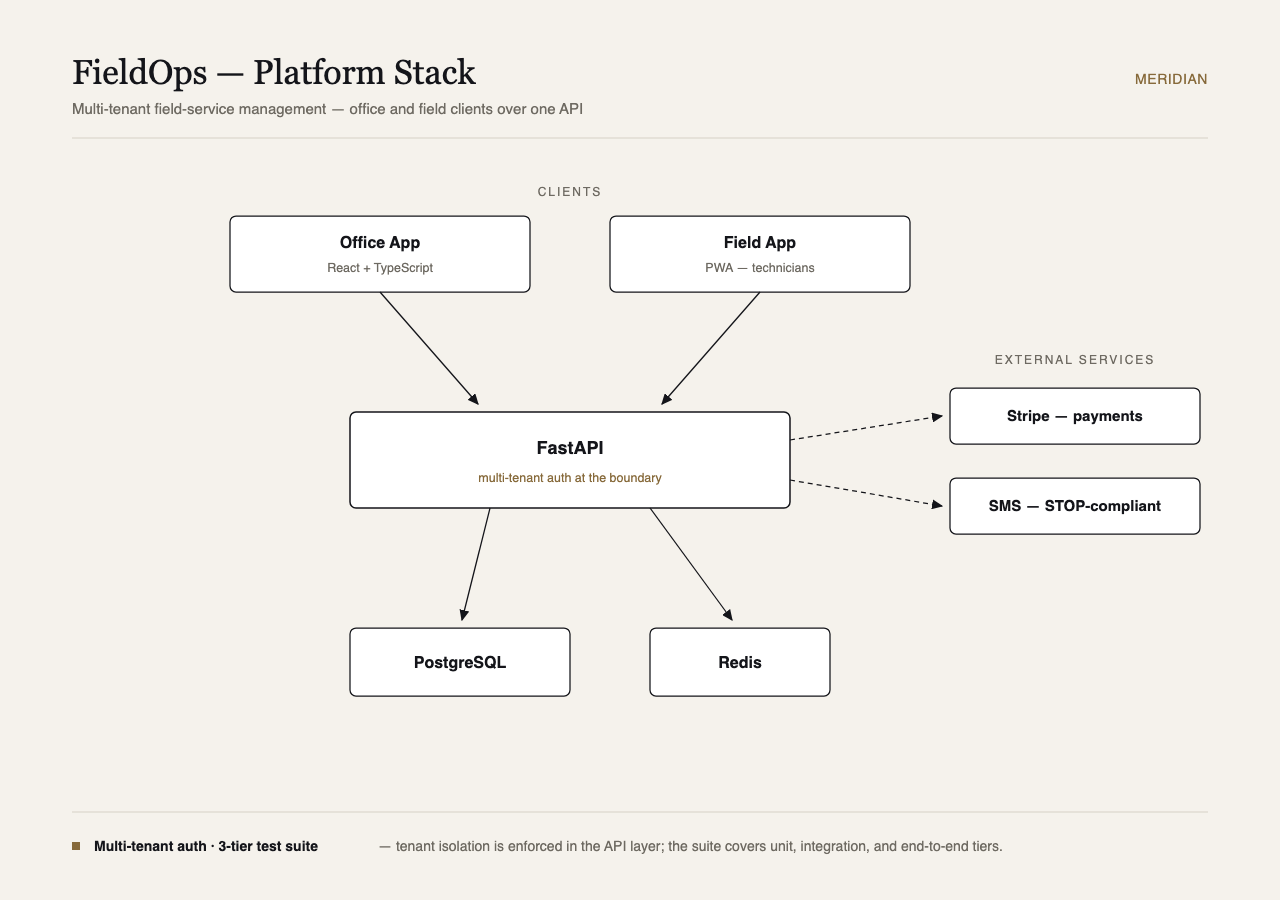
- Backend: a FastAPI service over PostgreSQL with Redis, structured as source + migrations + scripts, with a data-free health endpoint and Docker Compose for local infrastructure.
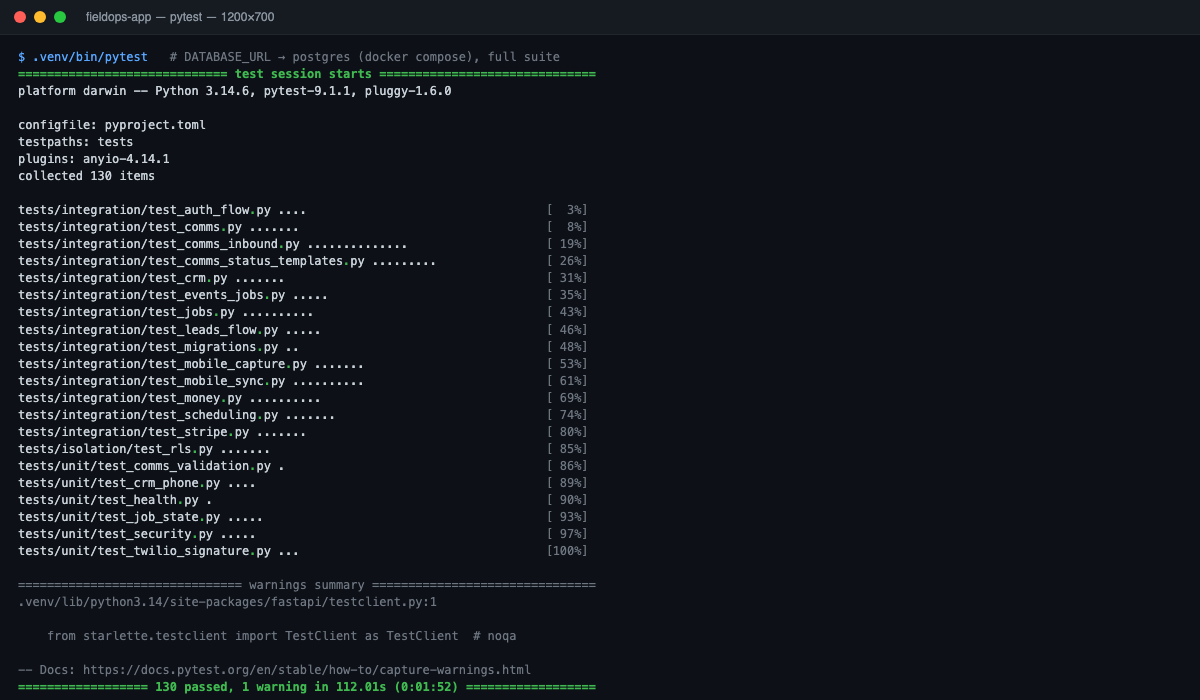
- Test discipline: a 130-function test suite organized into unit, integration, and isolation tiers — integration tests run against a real PostgreSQL, not mocks.
- Office web app: React + TypeScript in strict mode, built with Vite, proxying API and auth to the backend.
- Mobile: an installable PWA for field use.
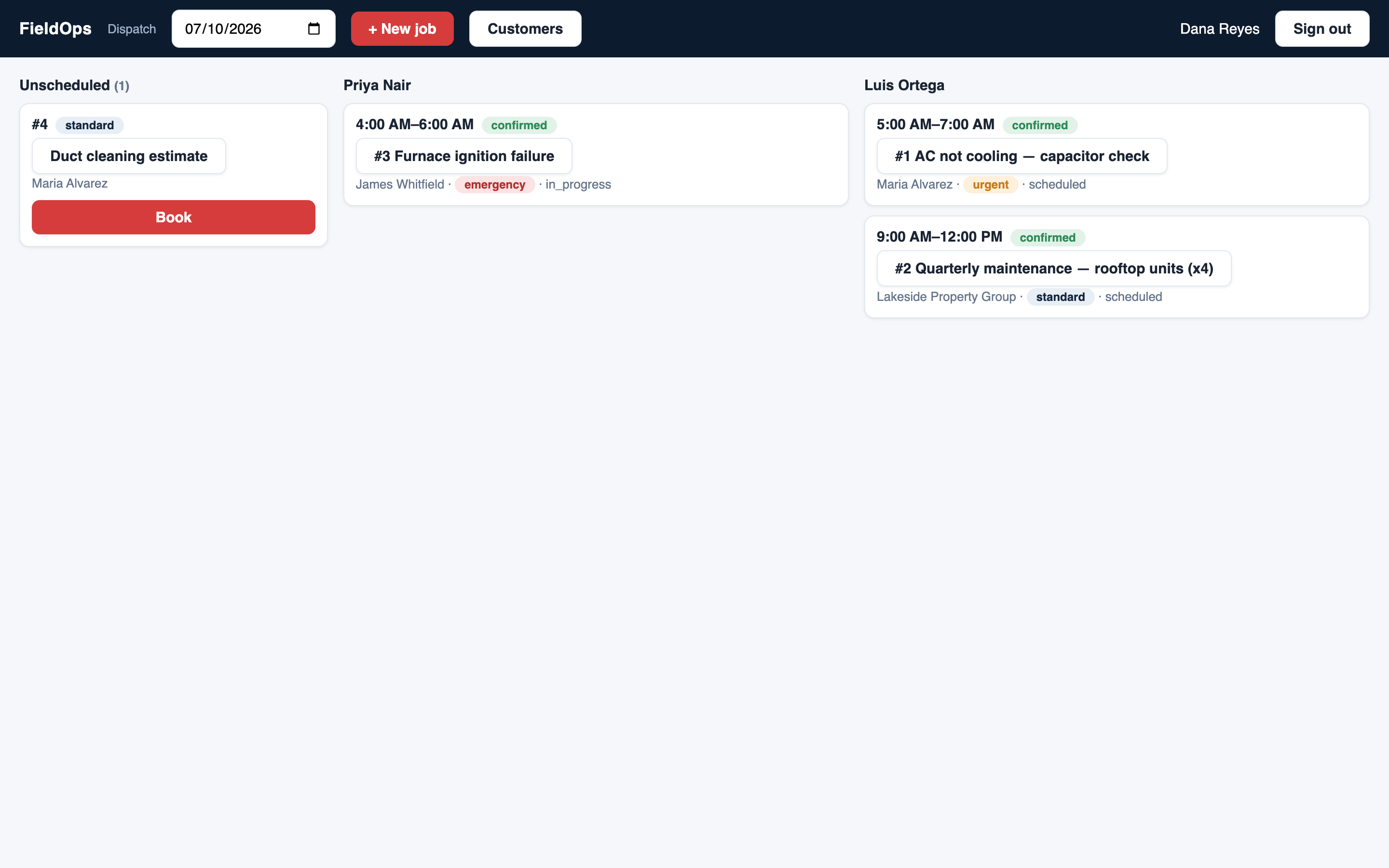
- Platform capabilities per the system blueprint: customer CRM, scheduling, Stripe payment flows, two-way SMS with STOP-word compliance and message templates, multi-tenant authenticated architecture.
Chamber III · The method
How it was built
Multi-tenant data isolation was designed from the first migration, not retrofitted — the part of a platform you cannot bolt on later.
The integration tier stays honest by running against real infrastructure rather than mocks: if the database schema and the code disagree, the suite says so. SMS handling is STOP-word compliant by design.
Chamber IV · The evidence
Craft evidence
Real captures of the platform running with demonstration data — no live customers, and nothing below implies otherwise.
Chamber V · Future vision
Where this is heading.
Future Vision · Concept The direction we are designing toward is the fuller platform this demonstration only sketches — the same real backend, office web app, and technician PWA, extended with deeper integrations: routing and calendar sync, accounting and parts-inventory hooks, and richer field workflows. This is a proposed concept, distinct from what exists today; it carries no customer or performance outcomes, because there are none to claim yet.
Chamber VI · The foundation
What's measured next
Demonstration project. It was built to production engineering standards to prove full-stack delivery capability; it is not operating a live business and has no customers. Feature claims and the test count are re-verified against the repository whenever this entry is published.
Verified, not claimed
- 130 tests passing against a real PostgreSQL — a 130-function suite in unit, integration, and isolation tiers; the integration tier runs against a real database, not mocks (re-verified 2026-07-12).
- Multi-tenant isolation from the first migration — designed in, not retrofitted, the part of a platform you cannot bolt on later.
- Two-way SMS, STOP-word compliant by design — with message templates, built into the platform rather than patched on.
- React + TypeScript in strict mode — the office web app built with Vite, proxying API and auth to the backend.
Want your operational platform built with this discipline?
This build maps to our Systems cluster — booking, dispatch, invoicing, and customer messaging with real tests against real infrastructure, strict typing, and multi-tenant security. The AI Opportunity Diagnostic maps where jobs, follow-ups, and invoices leak between your field team and your office — and ranks the fixes by return.